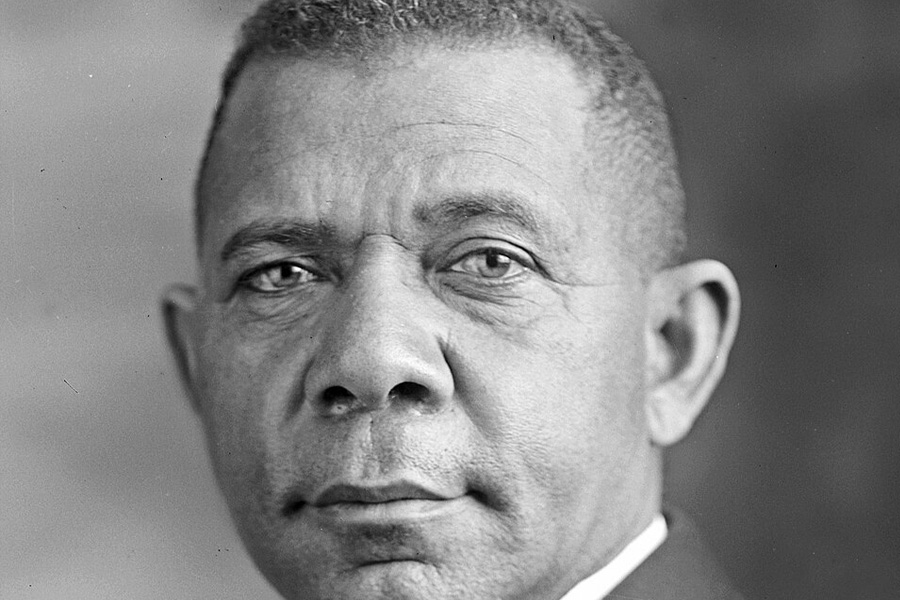
The Early Life of Booker T. Washington Jr.
I regard Booker T. Washington Jr. as a guy born into history before he could define himself. He was born on May 27, 1887, into a powerful African American family. Booker T. Washington, his father, led Black education, institution development, and national public life. His mother, Olivia A. Davidson Washington, was a great educator and shaped Tuskegee Institute.
Being born to such parents was a pleasure and a hardship. The Washington family was unusual. Ideas mattered, education was important, and daily life was related to Black America’s destiny. Despite public success, personal loss existed. During his childhood in 1889, Booker T. Washington Jr. lost his mother. That experience haunted his boyhood.
Olivia’s death affected the family, but it didn’t disintegrate. His father was a major influence, and his stepmother, Margaret Murray Washington, helped mold his childhood. In his upbringing, Booker Jr. faced both affection and punishment, as well as expectations. Tuskegee was more than school. It was nearly alive, and its beating elevated him.
Growing Up in the Shadow of a Giant
It is impossible to discuss Booker T. Washington Jr. without mentioning his father’s immense public prominence. A prominent Black leader in the US was Booker T. Washington, born in 1856 and died in 1915. His speeches, publications, and leadership at Tuskegee symbolized ambition, strategy, and racial uplift.
That inheritance might feel like a boulder blocking the horizon for a son. Inheriting a great name does not guarantee an easy life for Booker Jr. Perhaps because of its calmer battle, his narrative is intriguing. He did not become a national figure like his father. Instead, he quietly navigated education, administration, family, and public service.
That contrast says something important. Not every meaningful life arrives with applause. Some lives are more like bridges than monuments. Booker Jr. appears to have been one of those bridges, connecting the founding generation of Tuskegee to the generations that followed.
A Family Rooted in Education and Service
The Washington family represented a remarkable network of commitment, learning, and public purpose. Booker Jr. stood in the middle of this tradition.
His father, Booker T. Washington, founded the family’s prominent institution. His mother, Olivia A. Davidson Washington, laid the educational groundwork for that institution. After her death in 1889, her legacy, mission, and example lived on.
Margaret Murray Washington belongs in this family photo. She maintained a Tuskegee-inspired family as stepmother, educator, and reformer. Values around Booker Jr. were not abstract. Daily life was lived via employment, structure, education, and institution building for racial development.
I find that family setting crucial to understanding his life. He was not simply the son of a famous man. He was the product of a household in which education was both calling and instrument.
Marriage and the Creation of His Own Household
On December 31, 1913, Booker T. Washington Jr. married Nettie Blair Hancock in Houston, Texas. That date matters because it marks a shift from sonship to household leadership. By then, he was a grown man forming a family of his own while still carrying the weight of an extraordinary surname.
Nettie Blair Hancock Washington, born 1887 and died 1972, was a key companion in that following phase. In public-duty households, spouses typically have invisible duties. They keep the household stable, maintain continuity, and transform reputation into family culture. Nettie may have been one. She survived her husband’s death and helped link the Washington generation to the 20th century.
Their marriage placed Booker Jr. within a broader map of Black family life that stretched across states, cities, and institutions. It also gave rise to the next generation, which would continue to carry the Washington name into new historical settings.
Children and the Continuing Washington Line
Booker T. Washington Jr. and Nettie Blair Hancock Washington had children who extended the family’s legacy beyond Tuskegee and into new public and historical relationships.
Booker T. Washington III, their son, shows continuity. Many families treasure names. They pass hands, maintaining memory and demanding renewal. Booker III symbolized the next generation of the Washington family, reminding us that the saga continued.
Nettie Hancock Washington Douglass, their daughter, is especially significant. Her marriage into the Douglass family united the Washington line to Frederick Douglass. That union united two legendary African American names. They met like two enormous rivers, bearing memories of struggle, eloquence, education, abolition, and leadership.
This family connection has had lasting symbolic power. It turned lineage into a form of public stewardship. Descendants did not simply inherit notable ancestors. They inherited a responsibility to remember, speak, and teach.
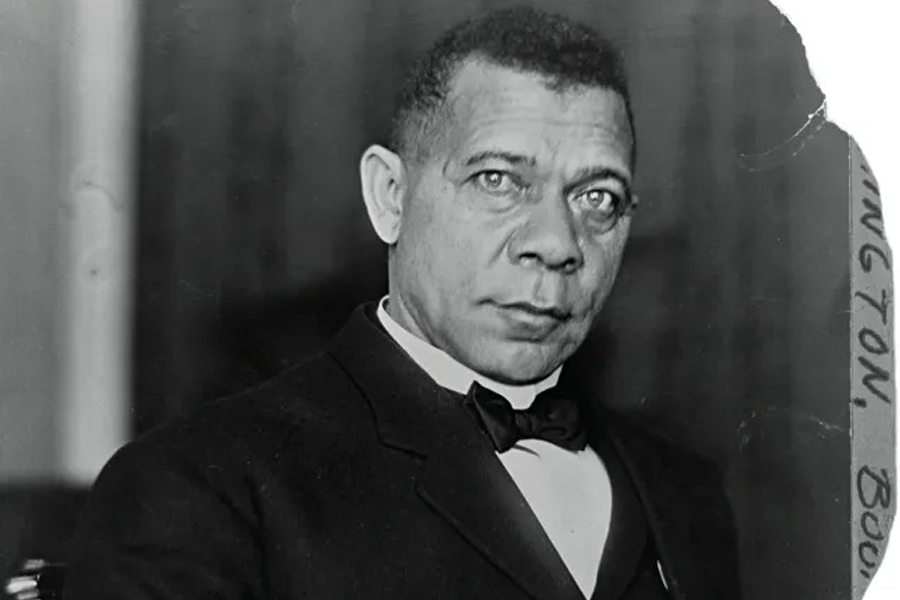
The Douglass Connection and Later Generations
The Washington-Douglass link remains one of the most fascinating aspects of Booker Jr.’s family story. Through his daughter Nettie Hancock Washington Douglass and later descendants, the family became custodians of intertwined legacies.
Later generations have seen Nettie Washington Douglass exemplify that legacy. Her public recognition of the Washington and Douglass families shows how legacy may continue after the original persons die. Family memory isn’t silent here. Classrooms, commemorations, public speaking, and community work include it.
One of the descendants who continued the family line’s education, service, and preservation was Larry Washington. These descendants demonstrate a key point. Legacy is unsustainable. Like a garden, it needs care. Names, alone, cannot preserve history. People do.
In that sense, Booker T. Washington Jr. matters not only because of who his parents were, but because he stands at a crucial midpoint in a multigenerational story. Without figures like him, continuity can fray. He helped hold the thread.
Career, Public Service, and a More Private Path
Compared with the monumental fame of his father, Booker T. Washington Jr.’s career appears more modest and less fully documented. Still, the available picture suggests a life shaped by educational administration, business activity, and service linked to the world his father helped build.
He was connected to Tuskegee and the late 19th and early 20th century Black progress networks. Institution building was crucial then. Schools, companies, churches, and civic organizations supported advancement. Booker Jr. appears to have contributed in practical ways, rather than through public awareness.
Military or government service records are also mentioned, notably during the early to mid-20th century warfare years. Whether in official service, registration, or administration, such features put him in national life. He was historical. He was going through it, although quietly.
I think it is important not to measure his life only by fame. History often favors the loudest names, but families and institutions are sustained by people who do necessary work without becoming symbols. Booker Jr. belongs in that category.
Life in the Early 20th Century
To understand him better, I place his life against the dates that shaped his generation:
| Year | Event |
|---|---|
| 1887 | Booker T. Washington Jr. is born on May 27 |
| 1889 | His mother, Olivia A. Davidson Washington, dies |
| 1890s | He grows up in the Tuskegee environment |
| 1913 | He marries Nettie Blair Hancock in Houston on December 31 |
| 1915 | His father, Booker T. Washington, dies |
| 1910s and 1920s | He raises a family and remains tied to educational and family networks |
| 1940s | He is associated with records from the Chicago area |
| 1945 | He dies on February 5 in Chicago at age 57 |
These dates show a life of major changes. His birth occurred 22 years after the Civil War. He grew up among segregation, industrialization, migration, and Black leadership debates. He survived World War I, the Great Depression, and WWII. From 1887 until 1945, African American life was full of strain, institution creation, and historical inventiveness.
Why Booker T. Washington Jr. Still Matters
I find Booker T. Washington Jr.’s life fascinating because it demonstrates the concept of legacy. Public memory emphasizes founders, visionaries, and orators. People maintain structure, morals, and the family tale alive between renowned generations.
He was a figure. He carried the Washington name following his mother’s early death and his father’s great career. He and Nettie Blair Hancock Washington had children. His children entered new and historically significant relationships. He made the Washington family legacy a living inheritance.
In that way, his life resembles a lamp protected in strong wind. It did not blaze with the same public brightness as his father’s, but it kept the flame.
FAQ
Who was Booker T. Washington Jr.?
Booker Taliaferro Washington Jr. was the son of Booker T. Washington and Olivia A. Davidson Washington. Born May 27, 1887, he died February 5, 1945. He pursued education, administration, and public service under the great tradition of Tuskegee and the Washington family.
Who were Booker T. Washington Jr.’s parents?
His father was Booker T. Washington, the influential educator and founder of Tuskegee Institute. His mother was Olivia A. Davidson Washington, an educator who played an important role in Tuskegee’s early development. She died in 1889, when Booker Jr. was still a small child.
Who helped raise him after his mother’s death?
After Olivia’s death, Booker Jr. remained under the influence of his father and the broader Tuskegee household. Margaret Murray Washington, his stepmother, became an important figure in the family environment that shaped his upbringing.
Who was Booker T. Washington Jr.’s wife?
He married Nettie Blair Hancock on December 31, 1913, in Houston, Texas. She later became known as Nettie Blair Hancock Washington and lived until 1972.
Did Booker T. Washington Jr. have children?
Yes. He had children, including Booker T. Washington III and Nettie Hancock Washington Douglass. Through them, the Washington family line continued into later generations.
How is the Washington family connected to the Douglass family?
The connection came through his daughter, Nettie Hancock Washington Douglass, whose marriage joined the Washington family line with the family of Frederick Douglass. This united two major African American historical legacies.
What did Booker T. Washington Jr. do for a living?
He appears to have worked in educational, administrative, and business-related roles connected to the broader world of Black advancement and institutional life in the early 20th century. His career was meaningful, though less publicly celebrated than his father’s.
Where did Booker T. Washington Jr. die?
He died in Chicago on February 5, 1945, at the age of 57.
Why is Booker T. Washington Jr. remembered today?
He is remembered as an important link in the Washington family legacy. His life helps explain how major historical families preserve their values across generations through marriage, service, education, and remembrance.