A Childhood Shaped by Oklahoma City
When I look at the life of Levita Kathryn “Skeet” Potter Bayless Anderson, I see a woman whose story reached far beyond the family name that later became famous through her sons. Born on October 25, 1926, in Lamont, Grant County, Oklahoma, Levita grew up in a family connected to Oklahoma City’s early grocery business. Her mother, Gladys Jones Potter, came from a family associated with the Jones Boys grocery stores, giving Levita an early connection to the world of food, retail, customers, and local enterprise.
She was raised in the Capitol Hill section of Oklahoma City with two brothers. At Lee Elementary and later Capitol Hill Junior and Senior High School, Levita developed the forceful personality that would become one of her defining characteristics. She participated in drama, served as a cheerleader, and became student council president during her senior year.
These details give me a glimpse of someone who was comfortable being seen and heard. Levita was small in stature, reportedly barely five feet tall, but people remembered her as a “tiny giant.” She had the kind of energy that could fill a room.
Her early working life began at Capitol Hill Bank, where she worked as a teller. There she met John Edward Bayless. The two married on June 1, 1948, at Epworth Methodist Church, beginning a partnership that would soon become both a marriage and a business venture.
Building the Hickory House
Between 1949 and 1951, Levita and John built the Hickory House Barbecue in Oklahoma City, which improved the Bayless family’s life considerably. The actual year of opening differs per source, but the restaurant eventually became the key institution in the family’s lives.
The Hickory House was situated on the northeast corner of SW 25th Street and Western Avenue. It started modestly, with little money and inventory, but Levita had something that couldn’t be evaluated on a balance sheet: personality.
She wasn’t just someone standing behind a restaurant counter. She became part of the restaurant’s identity.
Customers returned not only for the barbecue, but also for the environment. Levita was recognised for her meticulously groomed appearance, precisely coiffed hair, sophisticated apparel, confidence, and seemingly limitless vitality. Hospitality came easy to her. Over time, the restaurant attracted an intergenerational audience, becoming one of those neighbourhood institutions that seemed like an extension of the community.
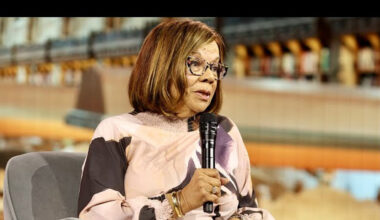
I found Levita’s photograph particularly fascinating because the restaurant served as a link between her past and the futures of her children. Her maternal relatives had previously worked in grocery stores, and she used that inherited knowledge with food and customers into something of her own.
John died in 1974, leaving Levita to continue running the restaurant. She ran it alone for around 12 years till the Hickory House closed in 1986 or 1987, after approximately 37 years.
That time reveals a lot about her character. She didn’t just walk away after the partnership ended. She stepped into the gap and held the doors open.
Marriage, Community Service, and a Second Chapter
In 1975, Levita married Ferris “Andy” Anderson, a restaurant equipment salesman. The two shared a passion for golf and remained together until Andy’s death in 2013.
Levita’s life outside the restaurant was just as active. She devoted considerable time to civic and community work, including PTA activities at local and state levels. During the 1960s, she served as president of the PTA at Northwest Classen High School. Her involvement with Epworth Methodist Church was another important part of her community life.
After turning 50, she discovered another pursuit that would become a major part of her later years: golf.
She took to the game with unusual determination. Levita eventually recorded three holes in one, won club championships, served on the board at Greens Country Club, and continued competing in senior events into her 80s.
I find that chapter particularly revealing. The restaurant had closed, her children had established careers of their own, and yet Levita did not retreat into quiet retirement. She simply found another arena in which to compete.
Levita and Her Three Children
Levita and John had three children: Skip Bayless, Rick Bayless, and LuAnn Bayless Tucker. Each eventually built a distinct professional identity.
| Family member | Birth or notable date | Profession or role |
|---|---|---|
| Levita Bayless Anderson | October 25, 1926 | Restaurateur and civic volunteer |
| Skip Bayless | December 4, 1951 | Sports commentator and television personality |
| Rick Bayless | 1950s | Chef, restaurateur, author, television host |
| LuAnn Bayless Tucker | circa 1957 or 1958 | Special education teacher |
The family became unusual in another way. All three children achieved meaningful accomplishments, but their childhood memories were not identical.
Skip Bayless and His Complicated Relationship With His Mother
Skip Bayless, born John Edward Bayless II, became one of America’s most recognizable sports commentators. His career included prominent positions at ESPN and Fox Sports, where his intense opinions and relentless delivery became part of his professional identity.
His memories of childhood, however, are far more complicated.
Skip has described Levita as one of the biggest personalities he ever knew, while also saying that she struggled to provide the emotional affection he needed. He has spoken publicly about feeling that she did not express love or care toward him during his childhood.
His relationship with her therefore contains a striking contradiction. He could admire her force while feeling wounded by her distance.
Skip has nevertheless credited his mother with certain influences that helped shape his career. She insisted that he attend church every Sunday and pushed him toward public-speaking lessons. He hated some of these lessons as a child, but later recognized their value.
He has also acknowledged that aspects of his own intensity remind him of Levita.
The family environment was further complicated by alcoholism and instability. Skip has described his father as abusive and his mother as emotionally distant. He has said that he often stayed away from home, including spending time with his maternal grandmother.
One especially important figure in his childhood was Katie Bell Henderson, a Black woman who worked for his grandmother. Skip has credited Henderson with providing structure, moral guidance, and a sense of care that he felt was missing elsewhere.
His reflections reveal a complicated truth: a parent can leave painful memories while still leaving powerful influences behind.
Rick Bayless and the Restaurant Legacy
Rick Bayless took a very different path.
While Skip preferred athletics, Rick developed a strong interest in cuisine, cooking, art, and the restaurant industry. He subsequently rose to prominence as a chef and restaurateur, well recognised for his work at Chicago restaurants Frontera Grill and Topolobampo.
He also became a cookbook author, James Beard Award winner, and long-term host of the PBS series Mexico: One Plate at a Time.
Skip loathed the family restaurant, but it became an essential source of community for Rick. He made connections with restaurant employees and built skills that would later take him far beyond Oklahoma City.
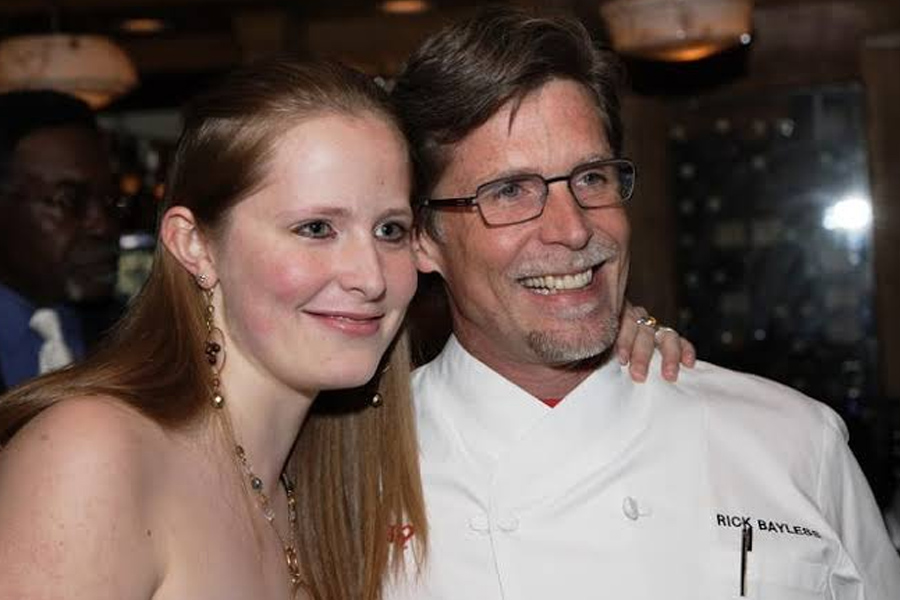
After the Hickory House closed, Levita assisted Rick and his wife, Deann, in the opening of the Frontera Grill in Chicago. In an intriguing twist, the mother who had created a barbecue restaurant in Oklahoma became an early supporter of her son’s famed culinary career.
Rick has also described the familial dynamic as harsh, citing drunkenness and instability. Nonetheless, he acknowledges that his mother’s drive and high expectations influenced her children’s tenacity.
LuAnn Tucker and a Life of Service
Levita’s daughter, LuAnn Bayless Tucker, followed another path entirely.
LuAnn became a national board-certified special education teacher and worked at Edmond Santa Fe High School. In 2007, she was named Teacher of the Year at the school.
Her professional life centered on education rather than entertainment or restaurants. She was also a cancer survivor and became a mother to Lane and Gracie, or Grace, with her husband, Mike Tucker.
LuAnn was considerably more private about the family’s personal history than her brothers. Her life demonstrates another side of the Bayless family story, one built around service, patience, education, and children rather than public celebrity.
A Family Marked by Contrasts
The Bayless family story is filled with contrasts.
There was the glamorous restaurant hostess and the emotionally complicated mother. There was the sports commentator who wanted distance from the restaurant world and the chef who found his calling in it. There was the sister who built a career in education while her brothers entered highly visible professions.
Levita’s personality seems to have been the brightest light in a household that could also be turbulent.
Her children have described parental alcoholism and an unstable home, but they also inherited determination. The restaurant demanded long hours, resilience, salesmanship, and the ability to keep moving when circumstances became difficult.
In that sense, the Hickory House was more than a restaurant. It was a pressure cooker.
It created memories, supplied a livelihood, brought generations of customers together, and placed the children close to the world of food and business. For Rick, it became a professional inspiration. For Skip, it represented an environment he wanted to escape.
The Grandchildren and Later Family Circle
Levita’s family eventually expanded to include three grandchildren mentioned in her obituary accounts.
Rick and Deann became parents to Lanie, also referred to as Lane Ann, who later married Kevin Sullivan of Chicago. LuAnn and Mike became parents to Lane and Gracie Tucker of Edmond.
By the final years of Levita’s life, the family had spread across different professions and cities. The restaurant had disappeared from Oklahoma City’s streets, but its influence remained embedded in the family’s history.
Levita also remained attached to her dog Buddy, who survived her at the time of her death.
Her Final Years
Levita spent her latter years at Epworth Villa in Oklahoma City. Despite her advanced age, she remained extraordinarily active, particularly via golf and community activity.
Andy Anderson died in 2013. Five years later, on March 3, 2018, Levita passed away at the age of 91.
She was cremated, and her memorial ceremony was held on March 17, 2018, at Metropolitan Baptist Church. Donations were made for breast cancer research.
Her death brought to an end the life of a woman who had lived in numerous worlds at the same time: daughter of an Oklahoma grocery family, bank teller, restaurant, wife, mother, civic volunteer, golfer, and grandmother.
The most remarkable aspect of Levita’s narrative, in my opinion, is that her legacy goes beyond simply being Skip and Rick Bayless’ mother. Before either of her sons rose to prominence, she had already accomplished something significant.
She created the Hickory House, which was also a family business. For decades, she welcomed customers, managed personnel, dealt with uncertainty, maintained appearances, and kept a tough business running. Her kids went on to become famous in quite different fields, but the desire to perform, compete, strive, and persevere was already present in the family.
FAQ
Who was Levita Bayless?
Levita Kathryn “Skeet” Potter Bayless Anderson was an Oklahoma City restaurateur, civic volunteer, and the mother of sports commentator Skip Bayless, chef Rick Bayless, and educator LuAnn Bayless Tucker.
When was Levita Bayless born?
Levita was born on October 25, 1926, in Lamont, Grant County, Oklahoma.
What was Levita Bayless known for?
She was best known as the co-owner and longtime operator of the Hickory House Barbecue Restaurant in Oklahoma City. She also became known for civic volunteering, PTA leadership, church involvement, and competitive golf.
Who was Levita Bayless married to?
She married John Edward Bayless on June 1, 1948. John died in 1974. Levita married Ferris “Andy” Anderson in 1975, and they remained married until his death in 2013.
How many children did Levita Bayless have?
Levita had three children: Skip Bayless, Rick Bayless, and LuAnn Bayless Tucker.
What happened to the Hickory House Barbecue?
Levita and John Bayless opened the Hickory House between 1949 and 1951. After John’s death, Levita continued operating it alone for about 12 years. The restaurant closed around 1986 or 1987 after approximately 37 years of operation.
What was Skip Bayless’s relationship with his mother?
Skip Bayless has described his relationship with Levita as emotionally complicated. He admired her powerful personality and credited her with teaching him habits that benefited his career, while also saying that he did not experience the emotional warmth he needed from her as a child.
What did Rick Bayless become known for?
Rick Bayless became an acclaimed chef, restaurateur, cookbook author, James Beard Award winner, and television host. His Chicago restaurants include Frontera Grill and Topolobampo.
Who was LuAnn Bayless Tucker?
LuAnn Bayless Tucker was Levita’s daughter and a national board-certified special education teacher. She was named Teacher of the Year at Edmond Santa Fe High School in 2007.
When did Levita Bayless die?
Levita died on March 3, 2018, in Oklahoma City at the age of 91. A memorial service was held on March 17, 2018.
What did Levita Bayless do after the restaurant closed?
After the Hickory House closed, Levita helped Rick and Deann Bayless during the opening of Frontera Grill in Chicago. She later devoted considerable attention to golf and community activities, eventually achieving three holes in one and competing in senior golf events well into her 80s.